
Airway Orthodontics for Kids
Improving sleep, breathing, and
facial development through orthodontics.
What is Airway Orthodontics for Kids?
As parents, you want your child to thrive—and that starts with something as simple as breathing well. Airway orthodontics is about more than just straightening teeth. It’s about making sure your child can breathe easily, sleep soundly, and grow into their healthiest self.
Here’s what we often see: when a child’s jaw or facial structure doesn’t develop quite right, it can actually make it harder for them to breathe—especially at night. You might notice mouth breathing, snoring, restless sleep, or even bedwetting. Maybe they’re tired during the day, struggling to focus at school, or dealing with frequent stuffy noses. These aren’t just “phases” kids grow out of. They’re often signs that the airway needs support. Traditional orthodontics focuses on teeth. We look at the whole picture—how your child breathes, how their airway functions, and how we can guide their jaw and facial growth to open up space for healthy breathing.
When kids breathe better, everything improves. They sleep more deeply, focus more easily, and their bodies get the oxygen they need to grow strong and healthy. That’s the foundation we’re building—not just a beautiful smile, but a healthier future.
Signs Your Child May Have Airway Issues
Early recognition of airway problems can lead to better outcomes. Watch for these common signs:
Sleep Related Issues
- Snoring or sleep apnea
- Mouth breathing during sleep
- Restless sleep or frequent waking
- Bedwetting in older children
Developmental Concerns
- Poor concentration or focus
- Behavioral issues
- Academic difficulties
- Hyperactivity or fatigue
Breathing Patterns
- Chronic mouth breathing
- Difficulty breathing through nose
- Loud breathing
- Shortness of breath during activities
Physical Symptoms
- Dark circles under eyes
- Long, narrow face development
- Crowded teeth
- Forward head posture
What Can Be Done?
Early intervention can guide proper facial development and establish healthy breathing patterns that last a lifetime.
Development Monitoring / Early Intervention
Addressing airway issues in children as young as 3-7 years old to guide proper development
Benefits:
- Early detection of airway problems
- Coordinated Care with pediatrician and specialists
- Guides facial growth in proper direction
- Improves nasal breathing patterns
- Reduces risk of sleep-disordered breathing
- Enhances overall development and behavior
Treatment Options
Benefits:
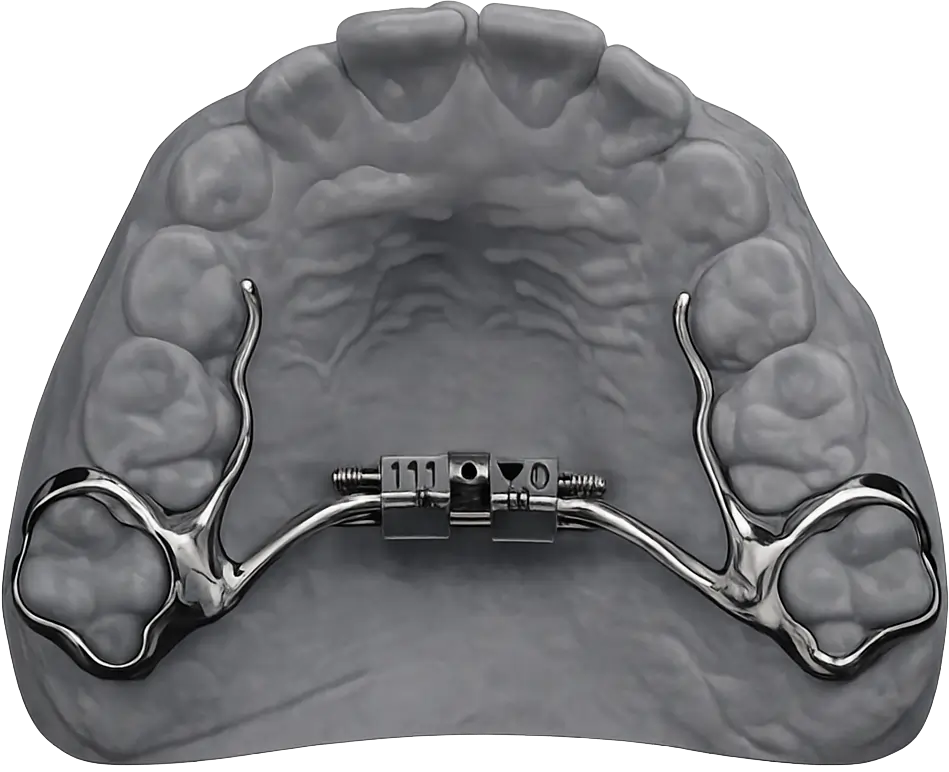
- Palatal Expanders to widen upper jaw and improve nasal airflow
- Adenoid/Tonsil Evaluation with ENT to evaluate enlarged tissue
- Myofunctional therapy to help regain tongue posture and
swallowing patterns - Habit appliances and partial braces to correct bite issues